


What Is SEO and How Does it Work?

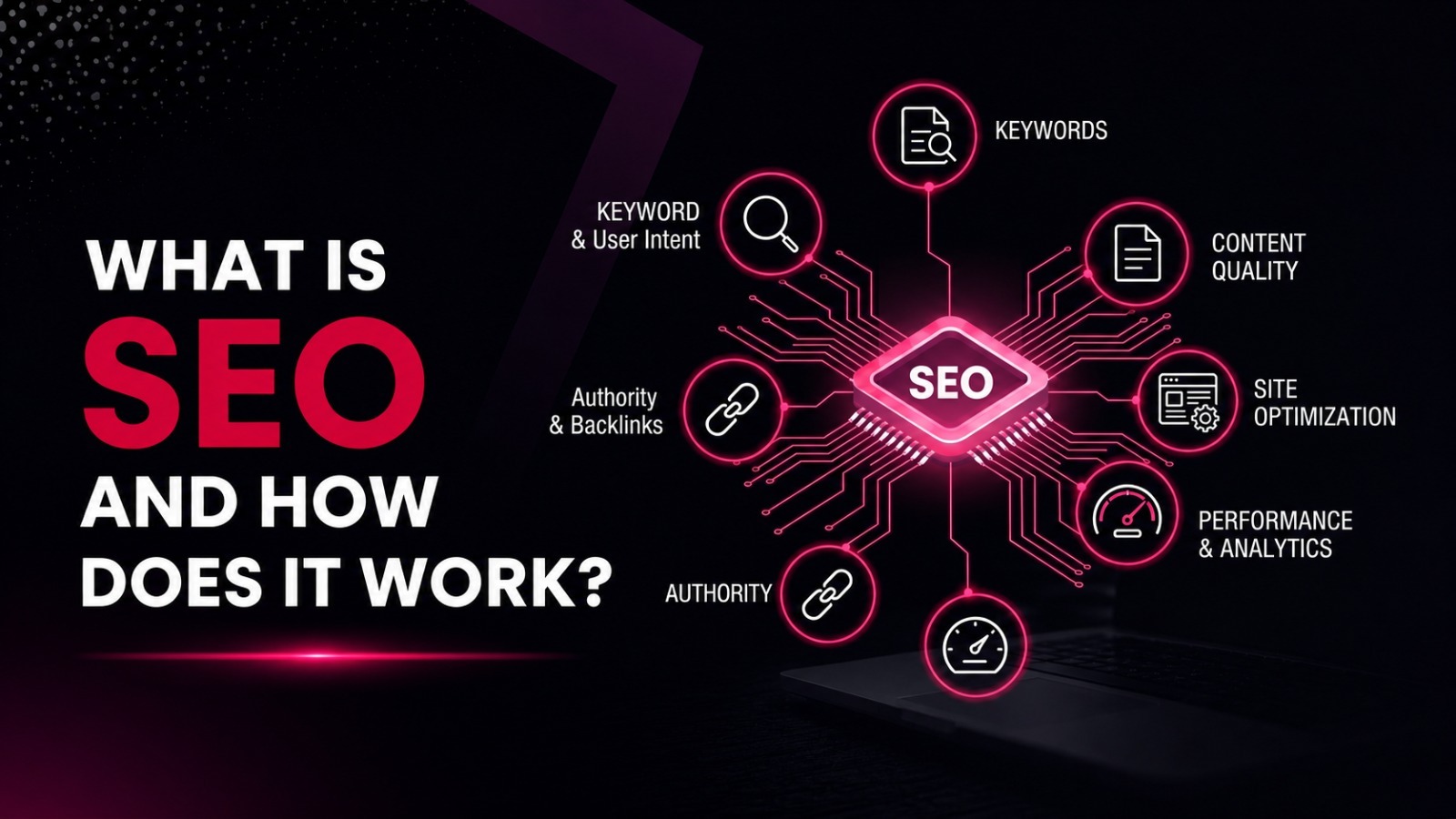
Are you just beginning your SEO journey? You might have heard that SEO can boost your website traffic and improve your rankings. But understanding how search engines work can feel overwhelming.
Don’t worry, we’re here to clear up the confusion. We’ll explain how artificial intelligence (AI) is changing digital marketing and how it fits into your SEO strategy. Once you grasp the basics, you’ll be able to use SEO effectively to attract visitors and generate quality leads.
Let's start with a simple question: what is SEO?
What is Search Engine Optimization (SEO)?
Let’s start with a simple question: what is SEO?
SEO means Search Engine Optimization. It’s a process to attract traffic from free, organic, and natural search results. These are the results you see in search engines. The goal is to boost your website’s ranking.
When your site ranks higher in search results pages (SERPs), more people will see it. That’s the main idea behind SEO.
There’s a helpful graphic by Rand Fishkin, co-founder of Moz. Maslow’s Hierarchy of Needs inspires it. Fishkin calls it ‘Mozlow's Hierarchy of SEO Needs.’ It shows how to approach SEO step by step.
What are the three pillars of SEO?
As a digital marketer, it’s crucial to know how to make your brand, website, or company easy to find. Staying updated on SEO trends helps you stay ahead.
SEO does change often, but the main ideas stay the same. We can break SEO into three key parts or pillars. You should know and work on these regularly.
Technical Optimization
This involves fixing things on your website that improve SEO but aren’t about content. It happens behind the scenes. For example, submitting your sitemap to Google is a simple technical task.
On-Page Optimization
This focuses on your website’s content. You want your content to be relevant and user-friendly. It also means using the right keywords. You can do this easily with platforms like WordPress, Wix, or Shopify.
Off-Page Optimization
This is about improving your site’s ranking through activities outside your website. The most important part is getting high-quality backlinks. These links boost your site’s reputation and authority.
Paid Search VS Organic Search – What’s the Difference?
First, it’s important to know the similarities too. Both help bring visitors to your website. But they work differently.
Position
Paid search results appear at the very top of the search page. Organic results are below them.
For example, searching “best water bottle,” paid ads show up first. Organic results follow below.
Keep in mind, Google’s AI Overviews are changing how ads appear. Staying updated with these changes is key to your SEO.
Time
Paid search gives quick results. You see them almost instantly.
Organic search takes longer. It can take weeks, months, or even years to build good rankings.
So, it’s a game of short-term versus long-term.
Payment
Paid search means paying for clicks. It’s called pay-per-click (PPC).
You pay each time someone clicks your ad.
In contrast, organic search traffic is free. But it does need time and effort to grow.
ROI (Return on Investment)
Measuring ROI is easier with paid search. Google provides detailed keyword data. You can track it in Google Analytics.
However, ROI from paid ads can plateau or decline after a while.
Organic search ROI is harder to measure, but it often improves over time. Long-term, it can be very rewarding.
Share of Traffic
Most of the traffic comes from organic search. According to BrightEdge, 53% of all website visits come from unpaid search results. Paid search, on the other hand, accounts for just 15%. This shows that the majority of clicks favor organic listings. People tend to trust and click on the natural results more often.
It’s not all about differences – there are also similarities between paid and organic search:
Keyword Research
Keyword research is essential for both paid and organic search. When users type a query into a search engine, they are entering a keyword. To succeed, you need to identify the right keywords for both types of search.
Landing Pages
Landing pages play a key role in this process. For SEO, your landing page must be connected to your website, providing relevant and valuable content. For paid search, you can use the same landing page as your organic efforts or create a dedicated, stand-alone page designed specifically for paid campaigns.
Traffic
Driving traffic is the main goal of both strategies. The important thing is that both attract users with clear intent. When someone searches on Google, they are actively looking for answers or solutions. This mindset makes it more likely they will take action once they find what they need.
How do search engines really work?
When people have a question, they turn to search engines to find answers online. These engines use complex computer programs called algorithms. Today, AI in digital marketing plays a major role in how these algorithms understand user intent and deliver smarter, more personalized results. They scan countless web pages, analyze their content, and decide which ones to show first for any given keyword.
That's why updates to Google’s algorithm can shake up the digital world. A small change can significantly impact brands and marketers. With the growing influence of AI in digital marketing, search engines are becoming more intelligent in analyzing behavior, context, and search patterns. It’s also important to remember that social media algorithms play a role in search visibility.
The process of how search engines operate can be broken down into three main steps: crawling, indexing, and ranking. First, search engines crawl the web, exploring pages and gathering information. Then, they organize this data into an index. Finally, when you search, AI-powered systems rank the most relevant pages to present accurate and helpful results.
Step 1: Search Engine Crawling
The first step is crawling. Search engines send out web crawlers to find new pages. These crawlers are also called ‘spiders’, ‘robots’, or Googlebots.
Their goal is to discover new pages online. They also check existing pages to see if anything has changed or been updated.
Crawlers follow links on web pages. For example, if your blog is linked from your homepage, the crawler will visit your homepage first. Then, it will follow the link to your new blog post.
Step 2: Search Engine Indexing
Next is indexing. This is when the search engine decides if it will include your page in its database.
If the page is valuable, it gets added to the search engine’s index. This index is like a big filing cabinet. It stores all the good content so it can be found later.
Most unique and helpful pages are indexed. But some pages might not make it into the index if:
- The content is duplicated
- The content is low quality or spam
- The page couldn’t be crawled
- The site has no inbound links
This process helps search engines show the best pages in search results.
Step 3: Search Engine Ranking
This step is the most important. It happens after crawling and indexing. Once your site has been crawled and indexed, it can be ranked.
Search engines use over 200 ranking signals. These signals fall into three main groups: technical, on-page, and off-page SEO.
Here are some signals search engines look at:
Keyword in title tag
If the keyword or a synonym appears in the title tag and on the page.
Loading speed
Whether the page loads quickly and works well on mobile devices.
Website reputation
If the site is seen as trustworthy and relevant.
Backlinks
The number and quality of links pointing to your page.
Content quality and relevance
If your content is helpful and matches what visitors want.
Mobile friendliness
If pages, images, and content are optimized for mobile use.
Need help with SEO, content marketing, or paid media? Contact Vivacity Solutions.
How does Google order search results?
Google uses many algorithms, like Hummingbird, Panda, and RankBrain. These decide how to rank and order results.
RankBrain is a machine-learning algorithm that builds on Hummingbird. It works like this:
If RankBrain sees a word or phrase it doesn’t recognize, it uses AI to understand it better. It connects it to similar searches using word vectors, thereby helping understand the search intent.
This helps Google interpret queries by turning keywords into familiar topics and ideas. As a result, it can deliver better results, even for unusual searches.
Instead of focusing only on keywords, RankBrain favors websites that satisfy users. It measures user satisfaction and aims to return the results users expect.
For better ranking, consider Google’s EEAT, Experience, Expertise, Authority, and Trustworthiness. It’s not a direct ranking factor but part of Google’s Search Quality guidelines.
Conclusion
AI is revolutionizing digital marketing by enhancing efficiency and effectiveness through data analysis, personalization, and automation. SEO remains a vital component, built on technical, on-page, and off-page strategies, with both organic and paid search playing important roles in driving traffic. Search engines employ complex algorithms like RankBrain to deliver relevant results based on user intent and satisfaction. Staying updated with these evolving tools and techniques is essential for optimizing online presence and achieving long-term success in digital marketing.
Frequently Asked Questions (FAQs)
1. What is SEO blog?
An SEO blog is a blog that is optimized for search engines using relevant keywords, proper headings, internal links, and high-quality content to rank higher on search results and attract organic traffic.
2. What is SEO?
SEO (Search Engine Optimization) is the process of improving a website’s visibility on search engines like Google to increase organic (non-paid) traffic.
3. What is SEO and how does it work?
SEO works by optimizing your website content, structure, and technical elements so search engines can easily understand and rank it. It includes keyword research, content creation, link building, and technical improvements.
4. What is SEO in marketing?
SEO in marketing is a digital strategy used to attract potential customers by ranking higher in search engine results, helping businesses generate leads and increase conversions without paid ads.
5. What is SEO in business?
In business, SEO helps improve online visibility, drive targeted traffic, and increase sales by making your website easier to find for people searching for your products or services.
6. What is SEO in YouTube?
YouTube SEO is the process of optimizing videos with keywords, titles, descriptions, tags, and thumbnails to rank higher in YouTube and Google search results, increasing views and engagement.
7. What is SEO full form?
SEO stands for Search Engine Optimization.
8. What is SEO in simple words?
SEO in simple words means making your website better so it appears higher in search engine results when people search for something related to your business.
Comments (1)
dkddkdkdk
Leave a Comment